

Relieving stress becomes easy when you possess excellent intrapersonal skills.
Awareness-based intrapersonal skills allow you to notice your inner processes and reactions. Thus, learning intrapersonal skills is the best strategy to relieve stress.
Replacing reactivity with self-observation and aware responses alleviates your inner tensions and fatigue and allows you to perform better and, as a result, enjoy wellness.
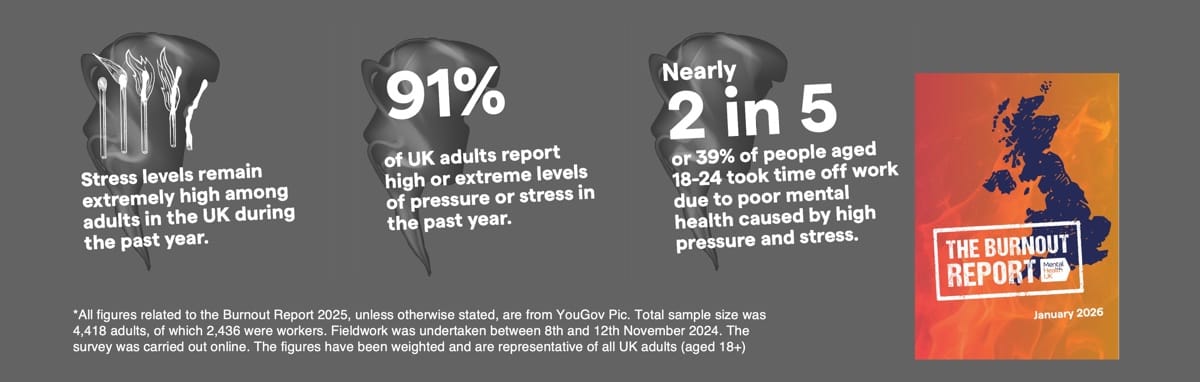
The problem is huge, as the 2026 UK Burnout Report found that 91% of adults experienced high pressure last year. The report also stated that 39% of young workers (Gen Z aged 18–24) took time off work due to poor mental health caused by high pressure and stress.
The Burnout Report also stated that 27% of employees who took time off due to extreme levels of pressure or stress stated that they didn't receive any support after returning to work, and only 17% had a formal return-to-work plan put in place.
Research has shown that stress can have a significant impact on both physical and mental health. This can lead to an increased risk of conditions such as heart disease, depression, and anxiety disorders.
Also, not knowing how to relieve stress heavily influences a person's ability to focus and get things done. This trend has been rising, as shown on the graph below.

Why is relieving stress important in the work context?
Relieving stress is incredibly important in the context of work, as many people come in contact with different stressors related to their jobs. Work-related stress can arise from a variety of stressors, such as challenging workloads, long hours, difficult coworkers or bosses, and high-pressure deadlines.
Regardless of what is triggering stress, your strategy to relieve stress is always the same:
- Notice your inner reactivity arising and take a pause;
- Become aware of your own awareness;
- Observe your actual choices and respond consciously and calmly.
What happens around us is beyond our control. None of us can control the events in the workplace or in the world around us. However, we can always control our own inner activities. What we feel, think, imagine, and how we choose to respond to what turns to us.
All those external stress triggers are powerless without your inner reactivity.
Our reactive mind is subconscious, and it can create more problems than there are in real life. As a result, we often transfer our past negative experiences and fears into the present situation. When we expect the worst and react automatically to every thought and emotion, it becomes easy to be stressed and anxious.
Thus, we see stress is high across all age groups, as shown on the graph below.

Prolonged exposure to work-related stress can lead to burnout, a state of emotional, physical, and mental exhaustion that can have devastating consequences for job performance, employee engagement, and overall wellbeing.
Studies have shown that employees who experience excessive levels of stress at work are more likely to take sick days, make mistakes, and experience decreased productivity. Stress is the main pathway to burnout, depression, and other mental health issues at work (see the long-term absence data below).

Employers can support their employees to relieve stress by providing systematic mind health training, encouraging sustainable work-life integration principles, and securing supportive work conditions. While there, the last has been addressed, the first and the second need much more attention from all employers.
Additionally, all employees should be able to measure their own actual stress levels and get feedback. Fortunately, efficient self-evaluation and practical exercises to relieve stress are integrated into the online training "Performing Under Pressure".

When we train our minds and learn intrapersonal skills, we can remain calm and observe the actual situations so we can respond adequately in our inner domain.
Conclusion
By prioritizing to relieve stress in the workplace, both employers and employees can create a healthier, more productive work environment that benefits everyone involved.
In addition, spending time in serene nature, engaging in creative activities, and taking time for relaxation matters as well. Studies have shown that the systematic application of stress relief techniques will reduce cortisol levels and improve overall health.
Finding effective ways to relieve stress is essential for maintaining good physical and mental health in today's fast-paced world.
Act now, and you will see improvement in employee engagement and work results!